
Best area to stay in Greece is one of the most searched questions when planning a trip, but the strongest answer is not always the most obvious one.
For years, travellers were directed toward the same names: Santorini for views, Mykonos for nightlife, Athens for history, Crete for scale. These destinations remain important, but travel behaviour in 2026 shows a clear shift. Visitors are increasingly looking for places that feel calmer, more personal, easier to navigate, and better aligned with the way they actually want to travel.
Recent tourism reports point to a more selective traveller: one who may spend more per day, take shorter trips, and expect each destination to justify its place in the itinerary. According to INSETE analysis, tourists in Greece are spending more per day but staying for shorter periods, which makes the choice of base more important than ever.
Choosing where to stay in Greece is no longer about selecting the most famous destination. It is about choosing the right setting.
For Culture Without the Intensity: Syros
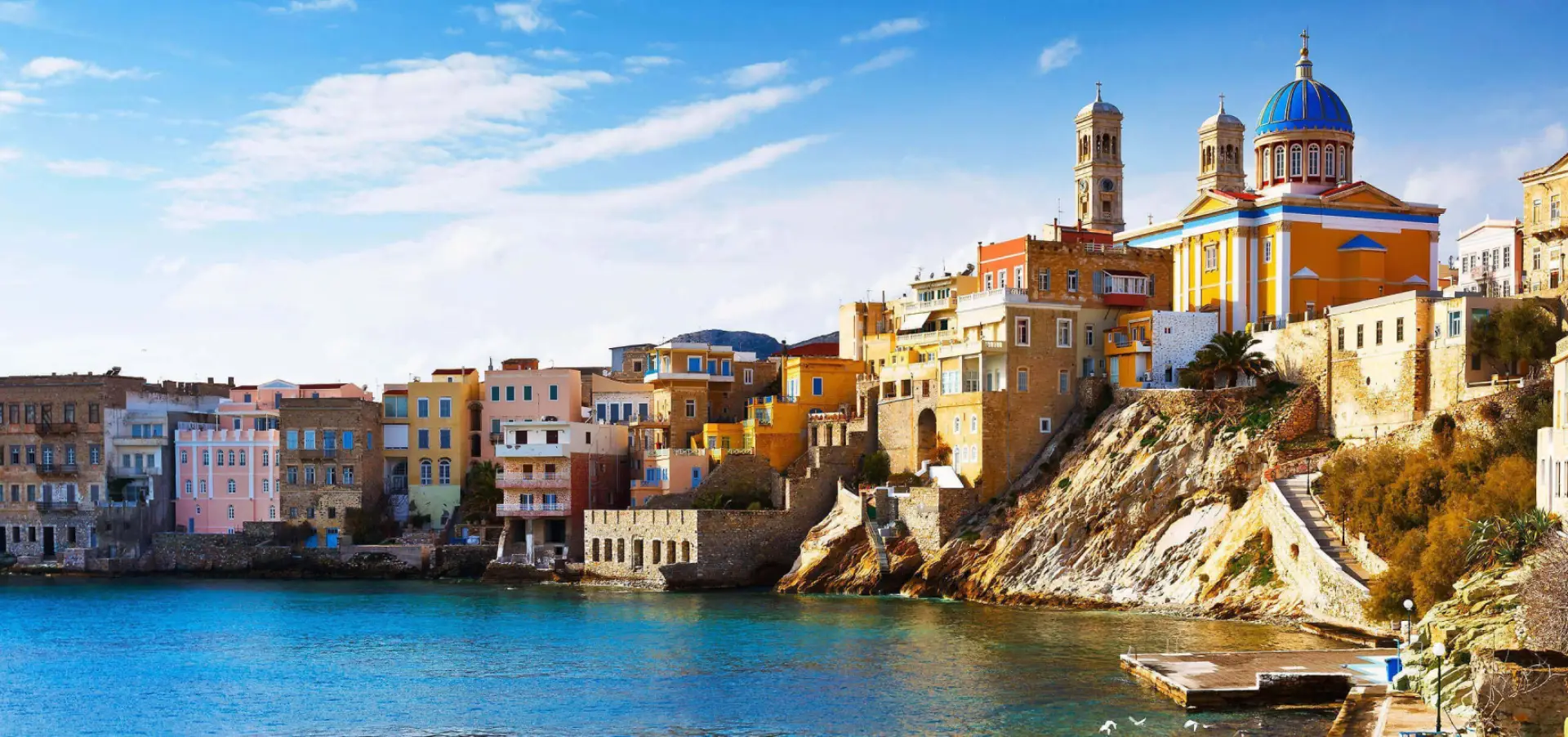
For travellers who want culture, architecture, and island life without the visual saturation of Santorini or the social intensity of Mykonos, Syros is one of the strongest choices.
Ermoupoli, the island’s capital, offers a rare combination of neoclassical elegance, working-town rhythm, and Cycladic setting. It feels lived-in rather than staged, which makes it especially appealing for travellers who want a Greek island with depth beyond beaches.
Syros has also been highlighted in recent travel coverage as one of the quieter Greek islands offering history, architecture, and a more immersive atmosphere.
It suits travellers who want refinement without performance.
For Food and Slow Island Life: Sifnos
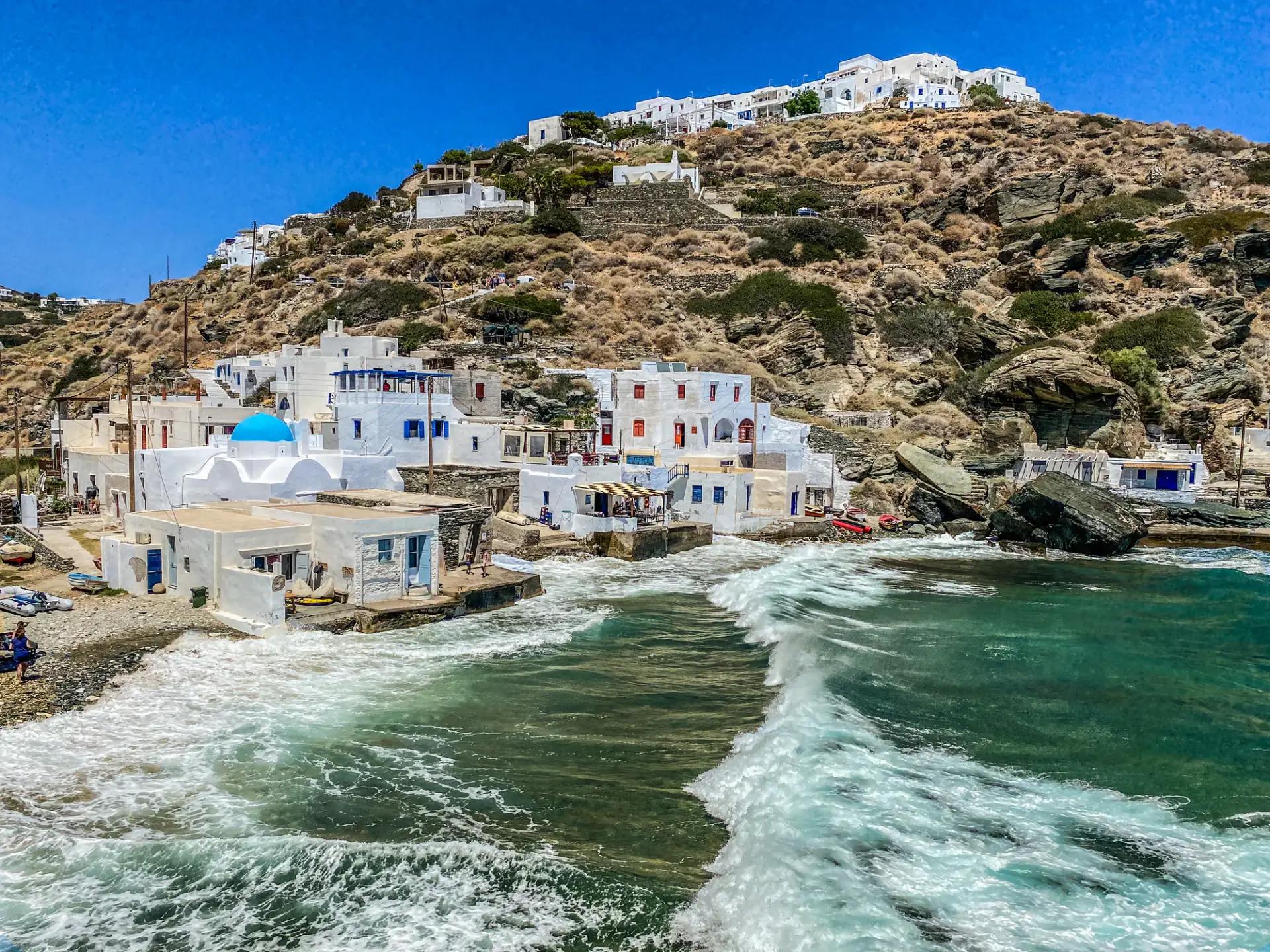
Sifnos is a natural choice for travellers whose idea of Greece is shaped by food, village life, and understated beauty.
It does not rely on dramatic visuals in the way Santorini does. Its appeal is quieter: traditional settlements, ceramics, walking paths, small beaches, and a strong culinary identity. For travellers who want their stay to feel intimate and rooted in local rhythm, Sifnos offers a more grounded version of the Cyclades.
Current island coverage continues to position Sifnos as one of the Cycladic islands gaining attention for food, atmosphere, and a more considered style of travel.
It suits travellers who want to feel part of a place rather than simply pass through it.
For Seclusion and Design Led Simplicity: Folegandros
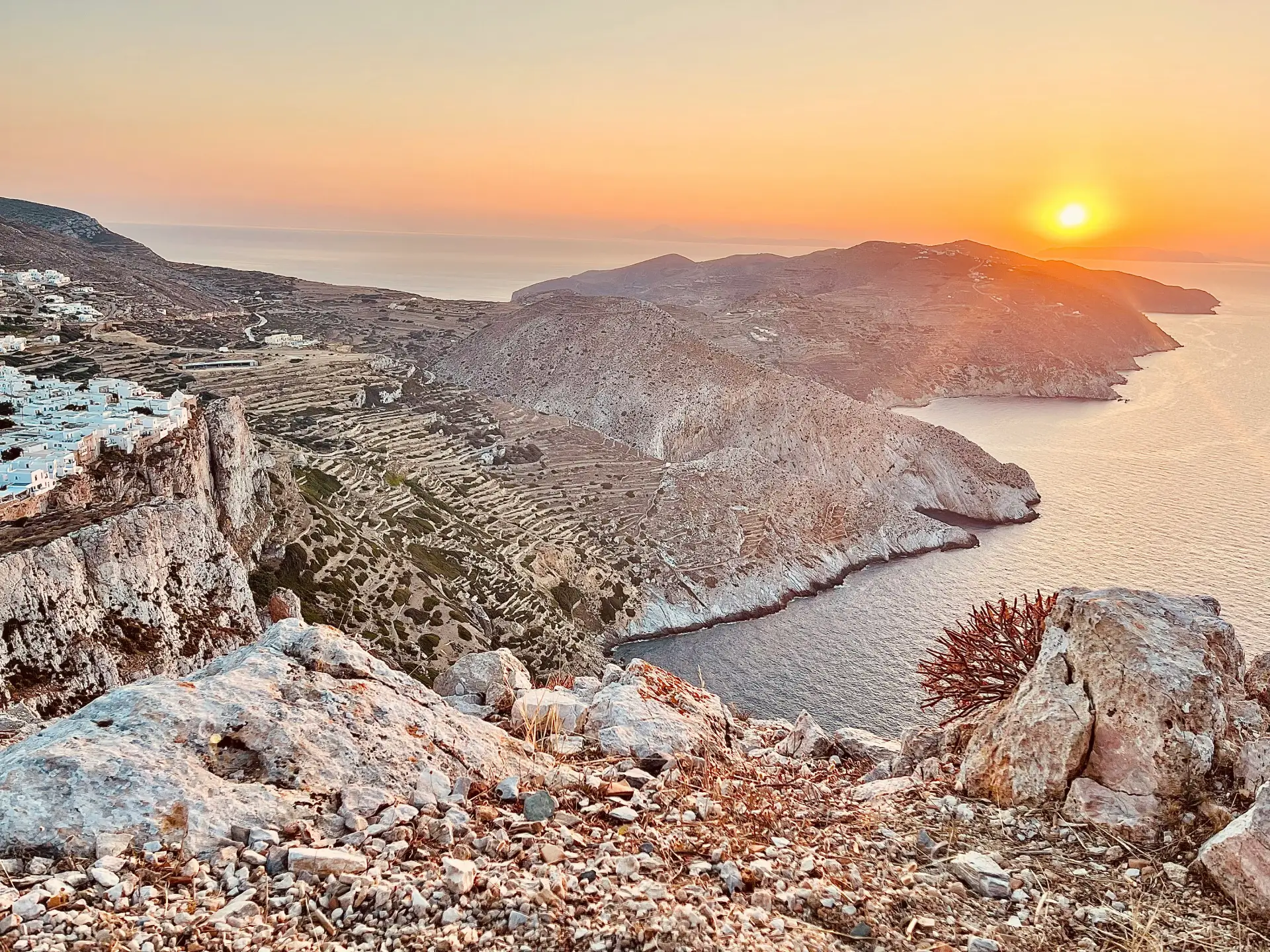
Folegandros is for travellers who want landscape, silence, and a strong sense of escape.
It has the Cycladic beauty people search for, but without the same level of development or visibility as the best-known islands. The experience is more elemental: cliffs, whitewashed villages, open views, and a slower evening rhythm.
Condé Nast Traveller and other recent island coverage continue to include Folegandros among Greek islands attracting travellers looking beyond the obvious choices.
It suits couples and travellers who want privacy, atmosphere, and a less crowded version of the Aegean.
For a Small Island Escape: Koufonisia
Koufonisia is increasingly appearing in travel searches and media as a quiet alternative to more commercial islands.
Its appeal lies in simplicity. The island is small, relaxed, and defined by walking, water taxis, clear beaches, and a sense of limited scale. Recent coverage has described it as one of Greece’s remaining low-key island escapes, with no mega-resort atmosphere and a slower way of moving around.
It suits travellers who do not need constant choice, but want beauty, ease, and a feeling of separation from overbuilt destinations.
For Mainland Depth and Year Round Interest: Arcadia
Not every strong answer to “where to stay in Greece” is an island.
Arcadia, in the Peloponnese, is one of the most interesting choices for travellers who want nature, mountain villages, walking routes, and a different expression of Greek culture. Recent coverage has drawn attention to the region’s Menalon Trail, traditional villages, forest landscapes, and emerging hospitality scene.
Arcadia works especially well for travellers who have already seen the classic island version of Greece and now want something quieter, greener, and more connected to the mainland.
It suits travellers interested in nature, gastronomy, hiking, and a slower inland rhythm.
For Wild Coastline and Privacy: Mani
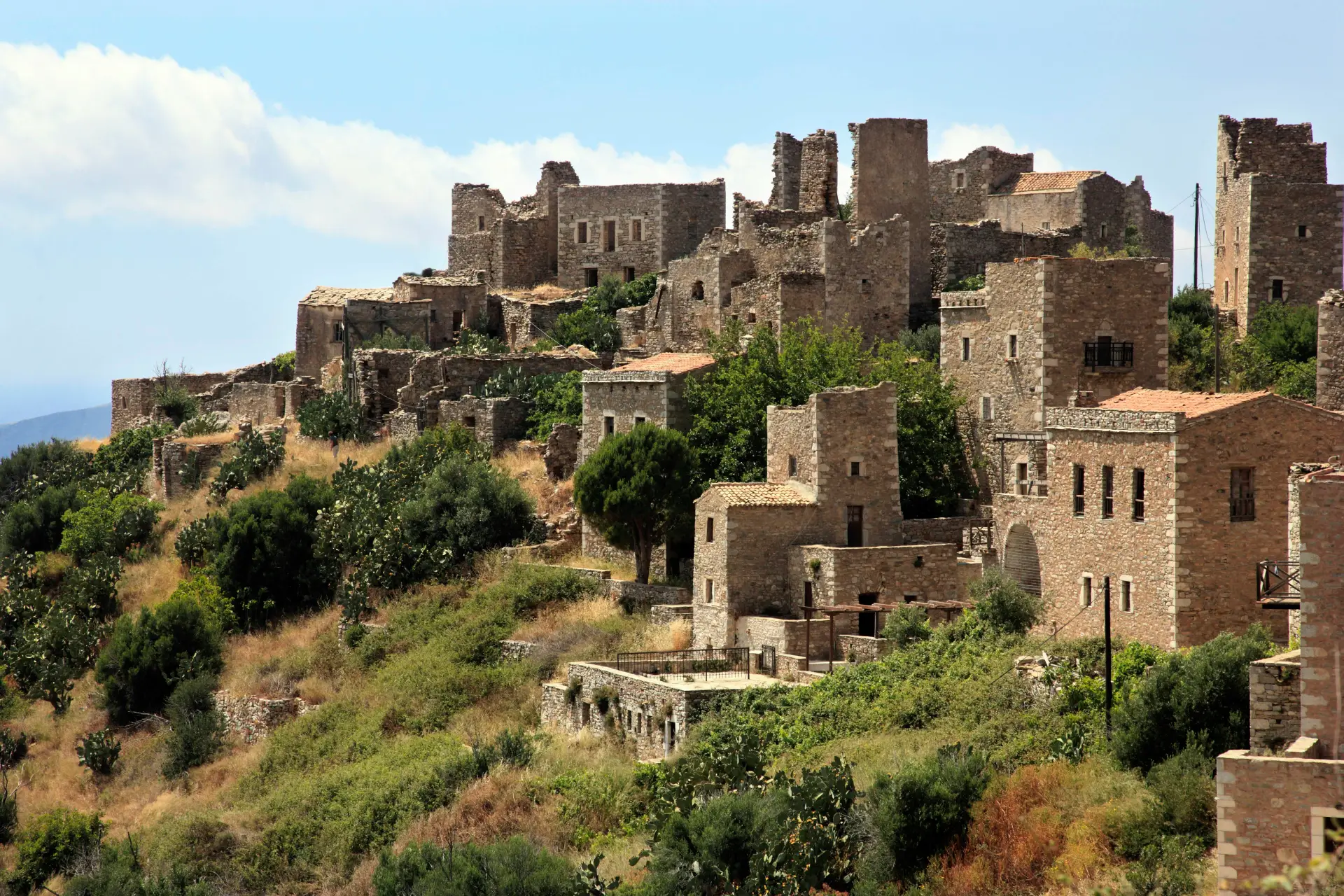
The Mani Peninsula offers one of the most distinctive mainland stays in Greece.
Located in the southern Peloponnese, it is defined by stone tower houses, rugged coastline, traditional villages, and a sense of independence that feels very different from the islands. It is not polished in the same way as resort-led destinations, and that is precisely its value.
Mani suits travellers who want privacy, road-based exploration, coastal beauty, and a strong sense of place. It is particularly strong for those who prefer villas, boutique stays, and landscapes that feel dramatic but not overcrowded.
For Easy Coastal Travel Without the Cyclades: Preveza and Lefkada
Preveza and Lefkada are increasingly relevant for travellers who want Ionian beauty without committing to the classic island-hopping model.
Preveza offers mainland accessibility, a relaxed old town, and proximity to beaches and ancient sites, while Lefkada provides island scenery with easier access by road. Recent travel coverage has noted rising interest in Preveza and Lefkada as part of a broader movement toward less crowded Greek alternatives.
This area suits travellers who want beaches, flexibility, and lower-friction logistics.
For Families and Soft Luxury: Kefalonia
Kefalonia is a strong option for travellers seeking a softer, more spacious island experience.
It offers beaches, villages, scenery, and established hospitality without the compressed feel of some smaller Cycladic islands. It is especially suitable for families, couples, and travellers who want comfort without being surrounded by constant movement.
Recent trend coverage has highlighted Kefalonia as one of the Greek destinations gaining renewed attention from travellers looking beyond the most obvious islands.
It suits travellers who want beauty, ease, and room to breathe.
For Resort Comfort and Beach Variety: Halkidiki
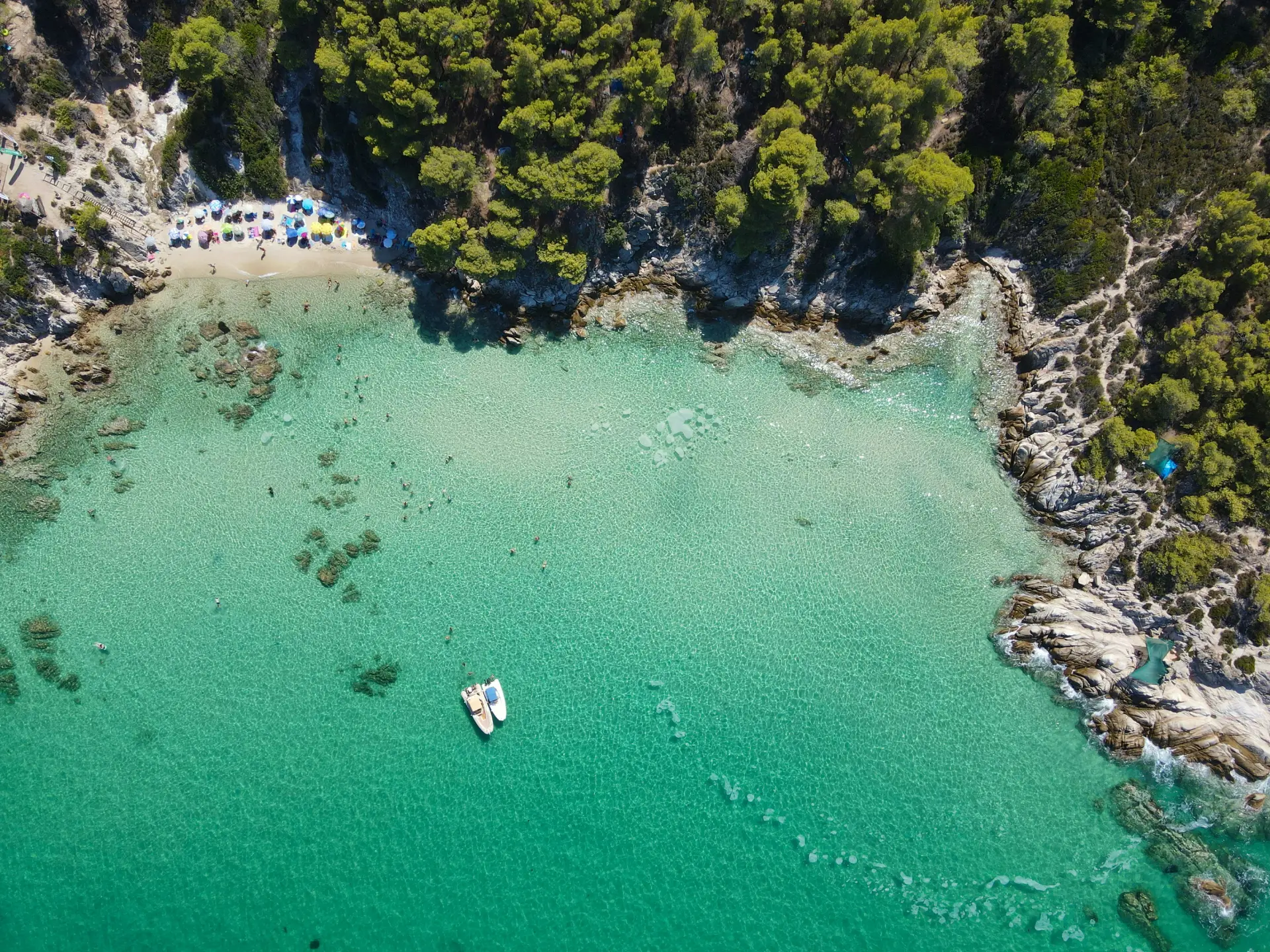
Halkidiki is often underestimated by international travellers, but it is one of the most practical choices for those who want strong beaches, resort comfort, and mainland accessibility.
Its three peninsulas offer different moods, from polished resorts to quieter coastlines. It works particularly well for travellers who want the feeling of a beach holiday without relying on ferries or complicated island transfers.
Recent travel coverage has included Halkidiki among the Greek areas gaining attention as travellers look for alternatives to busier destinations.
It suits travellers who want ease, beach quality, and a more straightforward structure.
Choosing the Best Area to Stay in Greece
The best area to stay in Greece depends less on reputation and more on fit.
If the priority is culture with island atmosphere, Syros is a strong answer. If the journey is built around food and quiet village life, Sifnos makes sense. If privacy and scenery matter most, Folegandros, Mani, or Koufonisia may feel more appropriate. For nature and mainland depth, Arcadia offers something entirely different. For ease, beaches, and accessibility, Kefalonia, Halkidiki, and Preveza/Lefkada are increasingly compelling.
This is the real answer behind the search. Greece is not one destination, and the best place to stay is not the same for every traveller.
The right choice is the one that supports the journey you actually want to have.
Plan Your Journey Thoughtfully
Where you stay in Greece shapes the entire experience.
Plous designs journeys around fit, rhythm, and access – selecting destinations not because they are the most obvious, but because they belong to the traveller, the season, and the journey as a whole.