

They are the ones where the sea remains part of daily life, hotels and restaurants are still engaged, connections support the journey and the island has enough character to feel complete after the intensity of summer begins to recede.
Late September sits in an unusually balanced part of the Greek travel calendar. The water has absorbed an entire summer of warmth. Days remain suited to beaches and time on the water, while mornings and evenings become more comfortable for villages, archaeological sites and long meals outdoors. The crowds begin to soften, but the islands have not yet moved into their October rhythm.
The short answer: Crete and Rhodes are strongest for warmth and variety. Naxos balances beaches, villages and food. Milos suits travellers drawn to landscape and the sea. Sifnos is ideal for gastronomy and slower days. Hydra offers an elegant short escape from Athens, while Corfu combines culture, countryside and Ionian character.
The right choice still depends on the journey. A couple looking for quiet meals and small hotels needs a different island from a family wanting beaches and straightforward logistics. A traveller with four nights should not choose in the same way as someone with an entire week.
Late September creates more possibilities.
Choosing well is what turns those possibilities into a coherent trip.
The Best Greek Islands for Late September at a Glance
| Island | Best for | Suggested stay | What to consider |
|---|---|---|---|
| Crete | Warmth, food, culture and a complete one-island journey | 5–8 nights | Choose one or two regions rather than crossing the entire island |
| Rhodes | Beaches, history and reliable late-summer atmosphere | 4–6 nights | Balance Rhodes Old Town with the coast rather than staying in one resort |
| Naxos | Beaches, mountain villages and local gastronomy | 4–6 nights | A car or driver adds considerably more depth beyond the coast |
| Milos | Distinctive landscapes, swimming and private boat days | 4–5 nights | Wind can affect plans on the water, so keep the itinerary flexible |
| Sifnos | Food, walking, understated hotels and slow travel | 4–5 nights | Ferry access should be checked before accommodation is confirmed |
| Hydra | Couples, car-free atmosphere and an easy Athens pairing | 2–4 nights | Choose it for harbour life and walking rather than a conventional beach holiday |
| Corfu | Architecture, countryside, food and a broader island experience | 4–7 nights | Weather can be more changeable than in the southern Aegean |
This is not a ranking from first to seventh. Each island answers a different version of the same question.
What do you want late September in Greece to feel like?
Why Late September Works So Well on the Greek Islands
September is frequently described as shoulder season, but that phrase can make it sound as though summer has already finished.
On most Greek islands, it has not.
The first half of the month often retains much of August’s energy. By the final ten days, the change becomes more noticeable. Beaches feel easier to access, tables become less difficult to secure and villages begin returning to a more natural daily pace.
The sea is usually still warm enough for swimming, but the air is less demanding than it can be in July or August. This changes how a day can be designed. A morning walk, archaeological visit or drive into the interior no longer needs to be compressed around the strongest heat. Lunch can extend into the afternoon without feeling like a retreat from the weather. Beach time becomes part of the day rather than its only practical structure.
Most visitor services remain available in late September, although exact flight, ferry, hotel and experience dates should always be checked. Our guide to when the Greek island season ends explains how the transition becomes more pronounced during October.
Late September is therefore valuable not because every island becomes quiet at once.
It is valuable because the journey becomes easier to balance.

1. Crete: The Strongest All-Round Choice
Crete is one of the best Greek islands for late September because it does not depend on one single version of island travel.
It has beaches, but it also has cities, mountain villages, archaeological landscapes, wineries, farms and a food culture strong enough to shape an entire itinerary. If one day becomes windy or less suited to the coast, the journey does not lose its purpose.
Late September is particularly well suited to travellers who want to combine swimming with exploration. Chania and western Crete provide Venetian architecture, old-town evenings, mountain landscapes and access to some of the island’s most recognisable beaches. Heraklion and the central region bring Minoan history, vineyards and a more urban local rhythm. Eastern Crete can suit travellers looking for refined resorts, quieter roads and time around smaller coastal towns.
The most common mistake is trying to treat Crete as though it were a compact island.
It is not.
A five-night stay should usually focus on one region. Seven or eight nights can support two bases when the route is deliberate. Crossing from one end to the other simply to collect famous beaches often produces more driving than experience.
Crete is best for:
- Travellers prioritising the warmest possible late-September conditions
- Food, wine and agricultural experiences
- Families or multigenerational groups needing variety
- Couples who want beaches without giving up culture
- A complete trip built around one island
Its scale is the reason it works so well.
It is also the reason it needs restraint.
2. Rhodes: Warm Seas With Historical Depth
Rhodes offers one of the strongest combinations of late-season warmth, beach time and cultural interest.
The medieval Old Town gives the island a centre of gravity that exists independently of the coast. Lindos adds a different relationship between history and landscape, while the interior reveals villages, walking routes and a quieter side of the island that is often missed by travellers moving only between the airport and a resort.
Late September allows these different parts of Rhodes to sit more comfortably within the same day. Exploring stone streets and archaeological sites becomes easier, while the sea remains central to the experience.
Rhodes is large enough to reward five or six nights. A shorter stay can work when accommodation is chosen carefully, but attempting to experience the Old Town, Lindos, inland villages and several beaches in three days leaves little space for the island itself.
For many travellers, the strongest structure is to divide the stay between culture and coast, either through two bases or through one well-positioned hotel supported by private transfers and considered day plans.
Rhodes is best for:
- Warm weather and dependable swimming opportunities
- Travellers interested in history as well as beaches
- Couples and families wanting straightforward air access
- A late-summer journey with enough variety for almost a week
- Travellers who prefer one substantial island to several short stays
Rhodes does not require the beach to do all the work.
That makes it especially reliable when summer begins to soften.
3. Naxos: Beaches, Villages and a Strong Local Identity
Naxos is one of the most balanced islands in the Cyclades.
Its western coast offers long beaches and accommodation suited to relaxed island days. Chora provides an active base with restaurants, shops and ferry access. Inland, mountain villages, walking routes, small producers and agricultural landscapes reveal an island whose identity is not built entirely around tourism.
Late September brings these elements together particularly well. Swimming remains an important part of the trip, but cooler mornings make it easier to explore villages such as Halki and Apeiranthos or spend time understanding the island through its food.
Naxos is known for cheeses, potatoes, citrus, olive oil and distinctive local dishes. A private food experience or village lunch can become one of the central days of the journey rather than something added between beaches.
Four nights provides an introduction. Five or six is better when the itinerary includes both coast and interior. A car or private driver changes the experience considerably; without one, travellers can easily see only the most accessible version of the island.
Naxos is best for:
- Travellers who want beaches without a beach-only holiday
- Food and village life
- Couples, families and groups with different interests
- A slower five-night island stay
- Travellers seeking a strong sense of place
Naxos does not ask travellers to choose between ease and depth.
With enough time, it offers both.
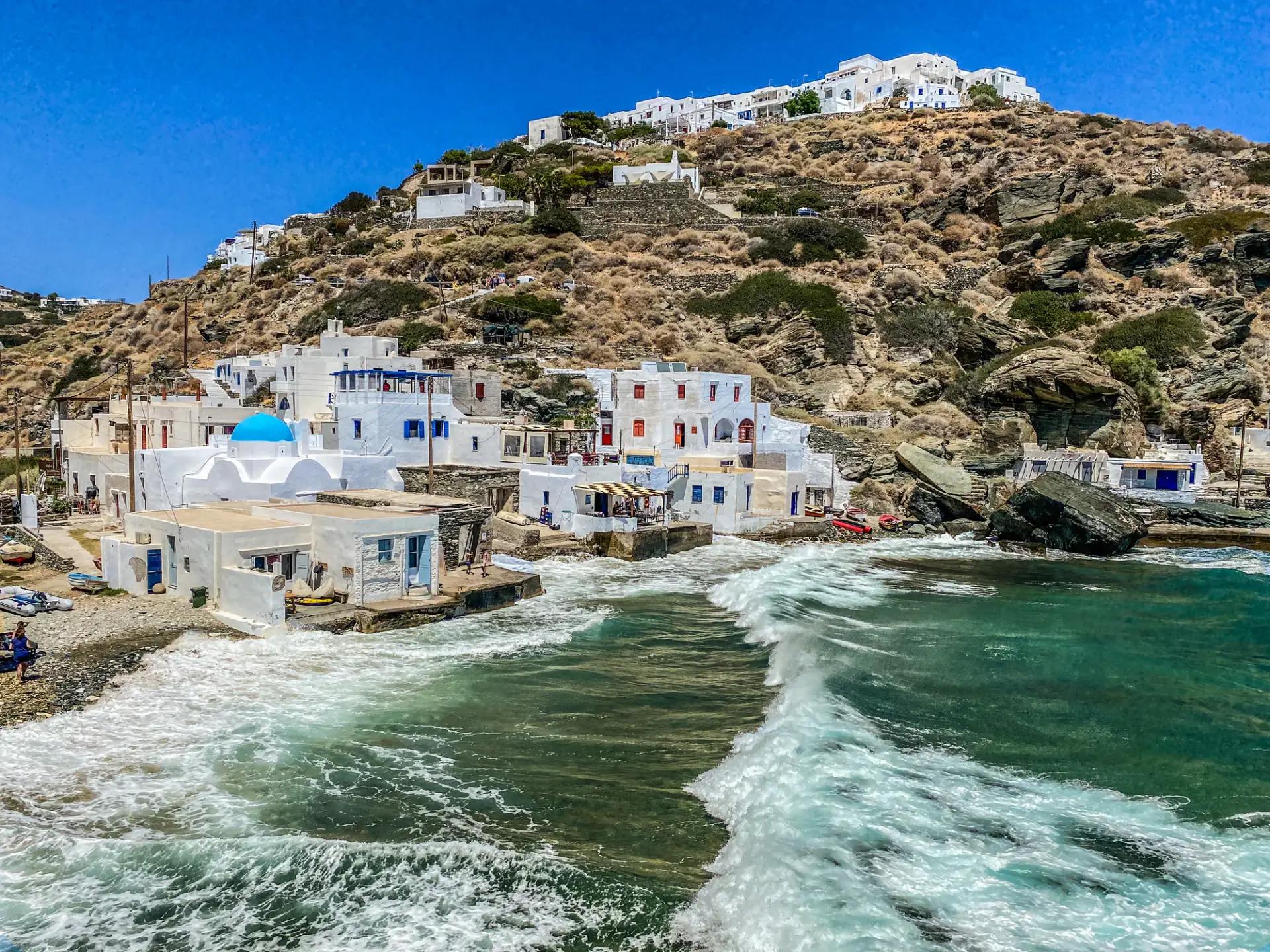
4. Milos: For Landscape and Time on the Water
Milos feels shaped by geology as much as by the Aegean.
Its coastline moves between pale rock, volcanic colour, caves and small coves, creating an island that is often experienced most powerfully from the sea. Late September can be an excellent time for a private boat day because demand begins to ease while the water remains inviting.
But Milos should not be reduced to a list of photographed beaches.
Plaka, Pollonia, Klima and the island’s mining history add context to the landscape. The strongest stays balance time on the water with slower evenings, carefully chosen meals and enough flexibility to change plans if the wind makes one coast less suitable than another.
That flexibility matters. A boat day should never be the only meaningful part of the itinerary, and it should not be fixed so rigidly that a change in conditions weakens the entire stay.
Four nights is a practical minimum. Five allows the sea day to move if necessary and gives the island more room beyond its most recognisable locations.
Milos is best for:
- Couples drawn to dramatic coastal scenery
- Private sailing and swimming
- Photography and landscape
- Small hotels and unstructured afternoons
- Travellers comfortable letting weather shape the order of the trip
Milos rewards planning.
It rewards leaving part of that plan open even more.
5. Sifnos: Late September Through Food and Pace
Sifnos is an island that becomes clearer when the pace slows.
Its appeal lies less in a sequence of major sights and more in the relationship between villages, walking paths, ceramics, small beaches and food. The island has a deep culinary identity, and late September is especially suited to travellers who want meals and local encounters to carry as much importance as time beside the sea.
Apollonia provides evening movement without requiring the scale of a large resort. Kastro brings history and atmosphere. Villages and coastal settlements each create a different base, which means accommodation should be chosen according to how the traveller wants the day to unfold.
A remote hotel may provide privacy but require transport for dinner. A central village base creates easier evenings but a different relationship with the coast. Neither is universally better.
Four or five nights gives Sifnos time to work properly. It suits travellers who do not need every day to introduce a new headline experience and who understand that a long lunch, a walk between villages or an unplanned return to the same beach can be the point of the journey.
Sifnos is best for:
- Gastronomy and local cooking traditions
- Couples seeking understated luxury
- Walking, villages and ceramics
- Small hotels and slower itineraries
- Travellers returning to Greece
Sifnos rarely needs to announce itself.
Late September gives travellers enough space to notice why.
6. Hydra: The Most Natural Short Escape From Athens
Hydra offers something different from the other islands on this list.
It is compact, car-free and closely connected to Athens, making it particularly useful for travellers with limited time. The harbour, stone houses, walking paths and maritime atmosphere create an immediate change of rhythm without requiring a domestic flight or a complicated island-hopping route.
Late September suits Hydra because walking becomes more comfortable and the island remains animated without relying on peak-summer intensity. Days can be organised around swimming platforms, coastal paths, private boat time, galleries and long meals overlooking the harbour.
Hydra is not the right choice for travellers whose idea of an island holiday depends on long sandy beaches, extensive road exploration or a large resort. Its luxury is more closely connected to atmosphere, proximity and the absence of vehicles.
Two nights provides a brief introduction, but three is more satisfying. Four can work for travellers deliberately seeking stillness or combining the island with a longer stay in Athens or the Peloponnese.
Hydra is best for:
- Couples and milestone trips
- A short island stay after Athens
- Art, architecture and maritime character
- Walking and car-free days
- Travellers who value atmosphere over scale
For a longer experience on the water, a journey through the Saronic Islands can place Hydra within a wider route shaped by sailing rather than hotel changes.

7. Corfu: An Island That Moves Beyond the Beach
Corfu offers a distinctly Ionian version of late September.
Corfu Town brings Venetian architecture, arcades, museums and a year-round social rhythm. Beyond it, the island opens into olive-covered countryside, villages, estates and a coastline that changes considerably from one side to the other.
This makes Corfu especially suitable for travellers who want an island to remain rewarding if the weather becomes more changeable. A day can move from the coast to a historic house, a food experience, a private countryside drive or an evening in town without feeling like a substitute plan.
The trade-off is that late-September weather in the Ionian can be less predictable than farther south. Travellers choosing Corfu should want its architecture, food and landscape as much as its beaches.
Four nights is workable, but five to seven allows a much stronger division between town and countryside. A split stay can make sense, provided it does not introduce unnecessary movement.
Corfu is best for:
- Culture and architecture
- Food, estates and countryside
- Travellers who want more than guaranteed beach days
- Longer island stays with varied interests
- Combining Greece with a journey through Epirus or the Ionian coast
Corfu does not feel like a final extension of summer.
It feels like the beginning of a different season.
Not sure which island genuinely fits your dates? Plous designs tailor-made journeys around late-September conditions, realistic connections, carefully selected accommodation and the pace you want to experience Greece. Plan My Greece Journey
Which Island Is Best for Your Travel Style?
The island should follow the experience, not the other way around.
| Your priority | Strongest choices | Why |
| Warmth and swimming | Crete or Rhodes | Southern location, long season and enough variety beyond the beach |
| Food and local producers | Sifnos, Crete or Naxos | Culinary identity is central rather than incidental |
| A romantic short escape | Hydra or Milos | Strong atmosphere without requiring a long multi-stop route |
| Culture and history | Rhodes, Corfu or Crete | The journey remains complete even away from the coast |
| Quiet luxury | Sifnos or Hydra | Smaller scale, considered hotels and slower daily rhythm |
| Landscape and photography | Milos, Corfu or Naxos | Distinctive coastlines, interiors and changing light |
| A full week on one island | Crete, Rhodes or Corfu | Enough geographic and experiential variety to avoid constant transfers |
This is also why choosing the right Greek island should begin with pace, interests and accessibility rather than a familiar name.
Can You Combine Two Islands in Late September?
Yes, but the combination should be based on geography and transport.
Late September still supports many ferry routes, yet a connection should be checked before the hotels are confirmed. Two islands that look close on a map may not connect directly on the required day. A journey can also lose much of its balance when it asks travellers to pass through Athens between two distant island groups.
The strongest combinations usually follow one of three patterns:
Athens and Hydra
This is the cleanest choice for a seven-day journey. Two or three nights in Athens followed by three or four in Hydra creates contrast without excessive travel.
Milos and Sifnos
These islands can create a compelling pairing of landscape and gastronomy when the seasonal ferry schedule supports the exact dates. Allow at least eight or nine nights in Greece so that neither stay becomes too short.
Athens and One Larger Island
For Crete, Rhodes or Corfu, a direct flight from Athens often creates a stronger itinerary than adding a second island. The larger island already provides the contrast that travellers frequently try to create through several hotel changes.
The practical limits explained in How Many Days in Greece remain useful: one island in a seven-day trip and two islands in ten days is realistic for most travellers.
Before confirming any combination, understand how ferry planning shapes an island journey. The most appealing pair of islands is not always the pair that creates the best trip.

What Should You Expect in Late September?
Warm Sea, Softer Air
Late September often provides excellent swimming conditions because the sea retains summer warmth. Evenings can feel cooler, especially when dining beside the water, so a light layer is useful.
Fewer Crowds, Not Empty Islands
Popular towns and beaches do not suddenly become deserted. The difference is usually one of pressure rather than absence: easier movement, more restaurant choice and a less compressed daily rhythm.
Greater Choice, but Not Unlimited Availability
Many hotels and experiences remain open, but the most suitable properties can still fill. Late September should not be treated as a reason to leave every decision until arrival, particularly for villas, distinctive small hotels or private boats.
Weather That Still Requires Flexibility
September is generally reliable, but no island can guarantee calm seas every day. Boat excursions, ferry crossings and exposed beaches should be planned with enough flexibility to move when conditions require it.
Common Late-September Planning Mistakes
Choosing Only by Temperature
The warmest island is not necessarily the right island. A traveller interested in food, walking and culture may gain more from a rounded destination than from a resort chosen only for a slightly higher forecast.
Assuming Smaller Means Easier
A small island with limited flights or ferry frequencies can require more planning than a larger island with direct air access. Accessibility is part of the experience.
Staying Too Far From Local Life
A remote beach hotel can be ideal when privacy is the purpose. It can be limiting when travellers also want village dinners, walking and spontaneous evenings. The right base matters as much as the island.
Adding a Second Island Because There Is Time on the Calendar
Four nights on one island is not always improved by turning it into two nights on each. The additional port transfer, checkout and arrival can consume much of the time that appeared available.
Treating a Boat Day as Guaranteed
Wind can change the plan even under clear skies. Private boat experiences should be placed where they can move within the itinerary rather than becoming dependent on one fixed day.
Returning to Athens on the Day of an International Flight
A final-night buffer can protect the entire journey from ferry or weather disruption. It also creates a more considered transition from the islands back to the city.

Frequently Asked Questions
Is late September a good time to visit the Greek islands?
Yes. Late September offers warm seas, generally comfortable weather and lighter crowds while most hotels, restaurants, ferries and experiences remain active. Exact conditions and operating dates vary by island, so transport and important reservations should still be confirmed.
Which Greek islands are warmest in late September?
Crete and Rhodes are among the strongest choices for sustained warmth and swimming. Their southern locations, long seasons and range of cultural and food experiences also make them rewarding if one day is less suited to the beach.
Can you still swim in Greece in late September?
Usually, yes. The sea has retained heat from July and August, and late September is often excellent for swimming. Wind and local weather can affect individual days, so a balanced itinerary should include more than beach time alone.
Are restaurants and hotels still open in late September?
Most visitor services remain open across established Greek islands in late September. Smaller properties or highly seasonal businesses may begin reducing schedules toward October, so confirm any hotel, restaurant or experience that is central to the trip.
Do ferries still run between Greek islands in late September?
Yes, the ferry network remains active. However, some seasonal routes operate on fewer days as the month ends. Check the exact connection before booking accommodation, particularly when combining smaller islands.
What is the best Greek island for couples in late September?
Hydra suits couples wanting an elegant short escape close to Athens. Milos works well for coastal scenery and private boat time, while Sifnos is particularly strong for gastronomy, understated hotels and a slower pace.
How many islands should you visit in ten days?
Two islands is a comfortable maximum for most ten-day trips that also include Athens. One larger island may be enough when choosing Crete, Rhodes or Corfu. Fewer bases allow more useful time in each destination.
Does it rain on the Greek islands in late September?
Rain is possible, with regional differences and increasing variability as autumn approaches. Corfu and the Ionian islands can be less predictable than southern Aegean destinations. Choose an island with cultural, culinary or inland experiences so one wet day does not weaken the trip.
Choose the Island That Still Has a Purpose
The best Greek islands for late September are not selected by weather alone.
They are selected by the relationship between season, access and experience.
Crete and Rhodes allow summer to continue within a journey that also has cultural depth. Naxos brings beaches into conversation with villages and food. Milos makes the sea central without reducing the island to a single boat day. Sifnos rewards travellers who value meals and pace. Hydra creates contrast with Athens through proximity rather than distance. Corfu opens a wider landscape of architecture, countryside and Ionian character.
None of these islands is right for every traveller.
That is precisely why the choice matters.
Plous designs tailor-made journeys throughout Greece by aligning the island, accommodation, transport and experiences with the exact dates and the way each guest wants to travel.
If you are considering Greece in late September, tell us how many nights you have, what you want the journey to feel like and which islands have caught your attention. We will help shape them into a route that works in the season, not only on the map.